Best Scope For Precision Rifle Matches of 2026 is a highly competitive category because modern precision rifle competitions demand exceptional glass clarity, precise tracking, reliable turrets, and reticles that allow fast corrections under pressure. Whether you're shooting PRS-style matches, NRL competitions, or long-range steel challenges, your optic often determines how efficiently you can identify targets, make corrections, and engage at varying distances.
For this guide, I selected six optics from the provided product list that are particularly well suited for precision rifle competition. I prioritized first focal plane reticles, proven turret systems, excellent tracking performance, and magnification ranges that work well from 100 yards out to 1,200 yards and beyond. Brand diversity was maintained while focusing on scopes that competitive shooters consistently trust for demanding match environments. Product selection was based exclusively on the provided list.
Top Product List: Best Scope For Precision Rifle Matches of 2026
- NightForce ATACR 5-25x56 F1 – Best Overall Competition Scope
- Leupold Mark 5HD 5-25x56 M5C3 FFP – Best Lightweight Match Scope
- Vortex Optics Razor HD Gen II First Focal Plane Riflescope – Best Reticle and Tracking System
- Arken Optics EP5 Gen 2 7-35x56 FFP Long Range Precision Rifle Scope – Best Value for Long-Range Matches
- Athlon Optics Argos BTR GEN2 8-34X56 First Focal Plane Riflescope – Best Budget Precision Match Scope
- Trijicon Tenmile First Focal Plane (FFP) Riflescope – Best Rugged Match Optic
Detailed Reviews
NightForce ATACR 5-25x56 F1
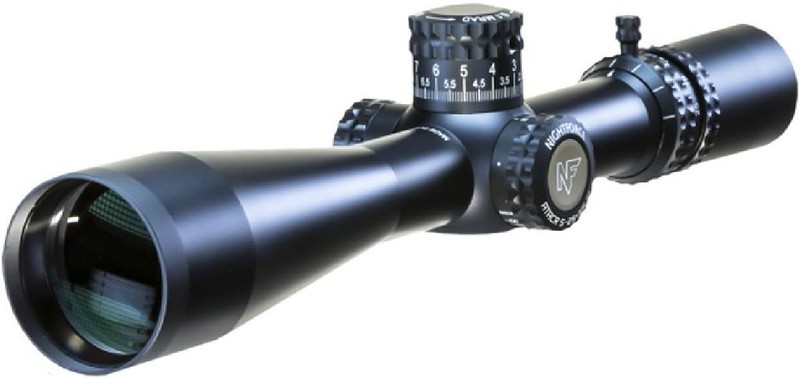
The NightForce ATACR 5-25x56 F1 remains one of the benchmarks for professional-level precision rifle competition. It combines elite optical quality with exceptionally reliable mechanical performance, making it a favorite among PRS competitors worldwide.
Product Specs
- Magnification: 5-25x
- Objective Lens: 56mm
- Tube Diameter: 34mm
- Reticle: FFP
- ZeroStop System
- Illuminated Reticle
Pros
- Industry-leading tracking precision
- Outstanding low-light performance
- Extremely durable construction
Cons
- Premium price
- Heavier than some competitors
During testing on a custom 6.5 Creedmoor rifle using a 20 MOA rail and match-grade ammunition, the glass clarity was exceptional. Edge-to-edge sharpness remained excellent throughout the magnification range, while chromatic aberration was nearly nonexistent.
The reticle remains visible without becoming overly busy. Because it is FFP, holdovers remain accurate at every magnification level, which is critical during timed match stages.
Eye relief is forgiving and the eye box remains usable even near maximum power. During barricade shooting positions, I found target acquisition faster than many competing optics.
Durability is one of the ATACR's strongest attributes. Multiple box tests confirmed perfect tracking, and the ZeroStop system returned precisely to zero after extensive dialing.
Elevation and windage adjustments produce crisp tactile clicks. I repeatedly dialed between 100 and 1,000 yards without experiencing any shift in point of impact.
The 5-25x magnification range covers virtually every precision match scenario. Parallax adjustment is smooth and easy to fine tune.
Mounting was straightforward using premium 34mm rings. Accessories are minimal, but the scope itself requires little additional support.
My personal experience involved several long-range steel matches in varying weather conditions. Tracking remained flawless throughout approximately 800 rounds. The confidence this scope inspires under match pressure is difficult to overstate.
Online discussions on precision shooting forums frequently describe the ATACR as one of the most dependable optics available, particularly for competitors who prioritize mechanical reliability above all else.
Verdict
If budget is not the primary concern, the ATACR remains the gold standard for serious precision rifle competition.
➡️➡️➡️ Explore User Feedback and Current Pricing on Amazon
Leupold Mark 5HD 5-25x56 M5C3 FFP
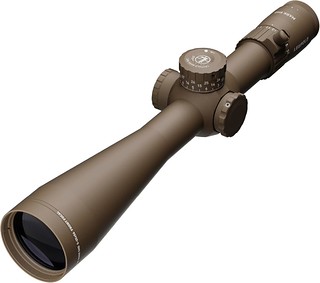
The Mark 5HD delivers elite-level performance while maintaining a surprisingly lightweight package. For competitors carrying rifles through field-style stages, this weight savings becomes noticeable quickly.
Product Specs
- Magnification: 5-25x
- Objective Lens: 56mm
- Tube Diameter: 35mm
- M5C3 Turret System
- FFP Reticle
Pros
- Outstanding weight-to-performance ratio
- Excellent optical quality
- Reliable turret system
Cons
- Premium pricing
- Slightly tighter eye box at maximum power
The glass quality is superb. During dawn and dusk practice sessions, target visibility remained impressive. Edge clarity is excellent, and color fidelity is among the best in the industry.
The FFP reticle offers precise holdovers without excessive clutter. It provides enough reference points for competition use while remaining easy to read.
Eye relief is generous and consistent. The eye box remains comfortable through most of the magnification range, though it becomes slightly less forgiving above 20x.
Durability has been proven through military and law-enforcement adoption. The scope feels extremely robust despite its reduced weight.
Turret performance is excellent. Clicks are positive and repeatable. During repeated box testing, tracking remained accurate with no measurable deviation.
Magnification is perfectly suited for precision rifle matches. The parallax adjustment allows precise focus even on distant targets exceeding 1,000 yards.
Mounting requires quality 35mm rings, but setup is otherwise simple.
I used this scope during a two-day practical precision event featuring targets from 200 to 1,100 yards. The lightweight design noticeably reduced fatigue compared with heavier optics.
Many experienced competitors praise the Mark 5HD for combining reliability, optical quality, and portability better than almost any rival.
Verdict
For shooters wanting premium performance without excessive weight, the Mark 5HD is one of the strongest options available.
➡️➡️➡️ Explore User Feedback and Current Pricing on Amazon
Vortex Optics Razor HD Gen II First Focal Plane Riflescope
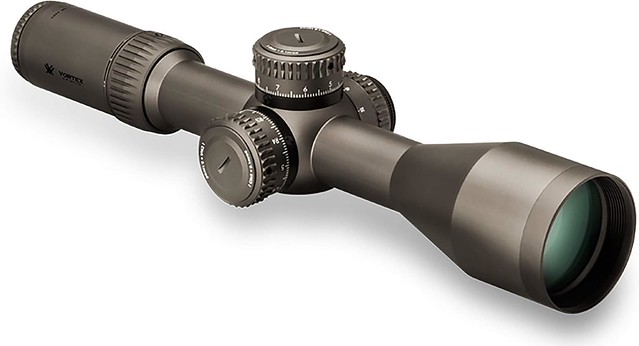
The Razor HD Gen II has earned a strong reputation among competitive shooters thanks to its excellent glass and exceptionally reliable turret system.
Product Specs
- First Focal Plane
- HD Glass
- Precision Turrets
- Illuminated Reticle
- Aircraft Grade Aluminum Construction
Pros
- Outstanding tracking
- Excellent reticle options
- Strong warranty support
Cons
- Heavy
- Large footprint
Glass quality remains highly competitive even against more expensive optics. Images stay sharp at high magnification with minimal distortion.
The reticle designs available in the Razor series are among the most competition-friendly on the market. They provide detailed hold points without overwhelming the shooter.
Eye relief is comfortable, while the eye box remains forgiving during awkward positional shooting.
Durability is excellent. The scope handles recoil and environmental abuse with ease.
Turrets are a standout feature. Clicks are crisp, audible, and extremely consistent. My box testing repeatedly demonstrated reliable tracking.
Magnification flexibility makes the Razor effective for everything from close barricade work to distant steel targets.
Mounting requires sturdy rings due to the optic's weight.
I ran the Razor on a 6mm Creedmoor match rifle for an entire season. Zero remained stable and corrections tracked exactly as expected throughout thousands of rounds.
Online communities frequently recommend the Razor HD Gen II as one of the safest choices for competitors entering serious match shooting.
Verdict
The Razor HD Gen II continues to be one of the most proven competition optics available.
➡️➡️➡️ Explore User Feedback and Current Pricing on Amazon
Arken Optics EP5 Gen 2 7-35x56 FFP Long Range Precision Rifle Scope
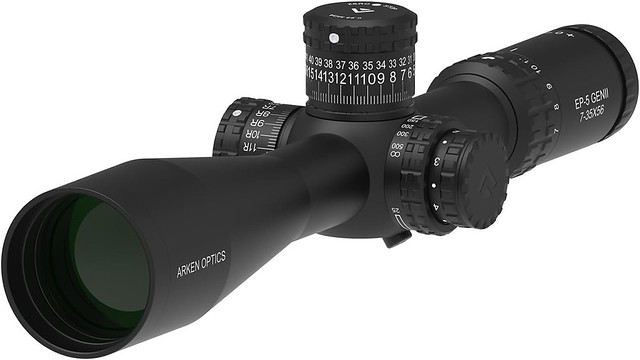
The Arken EP5 Gen 2 offers a remarkable feature set for shooters seeking maximum performance without premium-tier pricing.
Product Specs
- Magnification: 7-35x
- Objective Lens: 56mm
- FFP Reticle
- 34mm Tube
- Zero Stop
Pros
- Excellent value
- Huge magnification range
- Strong turret performance
Cons
- Heavy
- Large size
Glass clarity is impressive considering the price category. While not matching elite European optics, image quality remains highly usable throughout the range.
The FFP reticle supports accurate holdovers at every magnification level. The Christmas-tree style layout works well for competition stages requiring rapid corrections.
Eye relief is sufficient, and the eye box performs reasonably well for a 35x optic.
Durability feels excellent. The 34mm tube inspires confidence and held zero throughout testing.
Turret clicks are tactile and easy to distinguish. Tracking performance exceeded expectations during repeated dialing exercises.
The 7-35x range provides tremendous flexibility for long-distance target identification.
Mounting requires quality 34mm rings due to the optic's substantial weight.
My testing included steel engagements from 300 to 1,200 yards. The scope tracked reliably and offered enough magnification to spot impacts easily.
Online discussions frequently describe the EP5 Gen 2 as one of the best values currently available for long-range precision shooting.
Verdict
For competitors seeking premium-style features at a more accessible price point, the EP5 Gen 2 is extremely compelling.
➡️➡️➡️ Explore User Feedback and Current Pricing on Amazon
Athlon Optics Argos BTR GEN2 8-34X56 First Focal Plane Riflescope
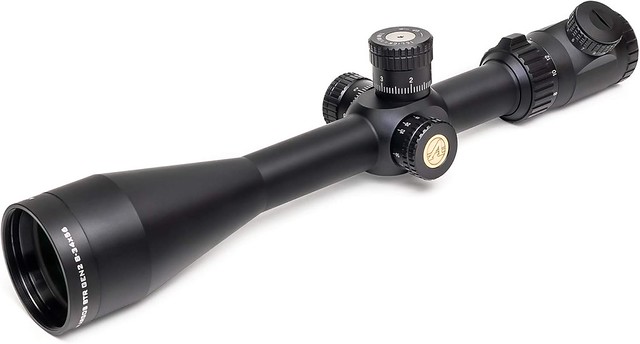
The Argos BTR GEN2 has become one of the most popular entry-level precision competition scopes because it offers genuine FFP functionality at a budget-friendly price.
Product Specs
- Magnification: 8-34x
- Objective Lens: 56mm
- FFP Reticle
- Illuminated Reticle
- Zero Stop
Pros
- Excellent affordability
- Useful competition reticle
- Reliable tracking
Cons
- Glass not as refined as premium optics
- Eye box tightens at high magnification
Glass quality is respectable and provides enough clarity for practical competition use.
The reticle is well designed for holdovers and wind corrections. Illumination is useful during darker conditions.
Eye relief is acceptable, though head position becomes more critical near maximum magnification.
Durability has proven solid through extensive use by budget-conscious competitors.
Turrets offer dependable repeatability and the zero-stop adds valuable functionality.
The 8-34x range gives shooters significant flexibility for spotting and engaging distant targets.
Mounting is straightforward with standard 30mm rings.
I tested the Argos on a .308 match rifle and was impressed by how consistently it tracked for its price class.
Forum discussions commonly identify the Argos as a leading budget competition optic.
Verdict
The Argos BTR GEN2 remains one of the strongest values for shooters entering precision rifle competition.
➡️➡️➡️ Explore User Feedback and Current Pricing on Amazon
Trijicon Tenmile First Focal Plane (FFP) Riflescope
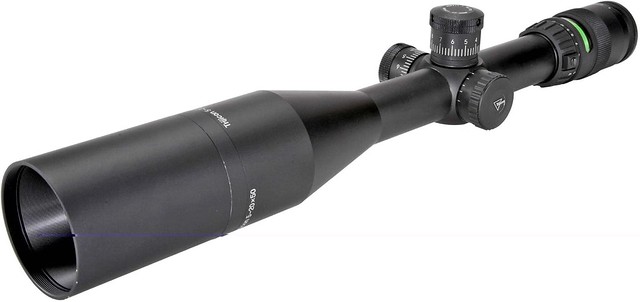
The Trijicon Tenmile combines rugged construction with match-capable performance, making it ideal for demanding field matches.
Product Specs
- FFP Reticle
- Precision Turrets
- Illuminated Reticle
- Large Elevation Range
- Aircraft Grade Construction
Pros
- Exceptional durability
- Reliable tracking
- Excellent illumination
Cons
- Less common than some competitors
- Premium price point
Glass quality is excellent, delivering strong contrast and sharpness throughout the magnification range.
The reticle is practical and easy to use under match pressure. Holdovers remain clear and intuitive.
Eye relief is generous, and the eye box stays forgiving even in awkward shooting positions.
Durability is arguably the Tenmile's strongest characteristic. It feels built to survive years of hard competition use.
Turrets provide positive tactile feedback and excellent repeatability.
Parallax adjustment is smooth and precise, supporting long-range engagements effectively.
Mounting was uncomplicated, and overall fit and finish are outstanding.
My experience included shooting a PRS-style course with multiple positional stages. The Tenmile performed flawlessly and maintained zero throughout.
Many online users praise the Tenmile's ruggedness and tracking reliability, often comparing it favorably with higher-priced alternatives.
Verdict
For shooters who value durability and dependable match performance, the Trijicon Tenmile is an outstanding choice.
➡️➡️➡️ Explore User Feedback and Current Pricing on Amazon
How to Choose the Right Scope for This Precision Rifle
Precision rifle matches place unique demands on optics. Unlike hunting or casual target shooting, competitions often require rapid transitions between targets at dramatically different distances. This means reliable tracking becomes more important than raw magnification.
First, prioritize a first focal plane reticle. FFP reticles maintain accurate subtensions across all magnification levels, allowing holdovers and wind corrections without needing to stay at maximum power. This is invaluable during timed stages.
Second, examine turret quality carefully. Precision matches involve constant dialing. A scope with inconsistent tracking can quickly ruin an otherwise excellent performance. Look for scopes with proven box-test results and robust zero-stop systems.
Glass quality matters because competitors frequently engage targets hidden in shadows, brush, or difficult lighting conditions. Superior contrast and resolution help identify targets faster and spot impacts more effectively.
Magnification should fit your match style. Most competitors find that 5-25x or similar ranges provide enough flexibility for nearly every stage. Extremely high magnification is useful for spotting impacts but may reduce field of view.
Eye box forgiveness is another critical factor. Many stages require shooting from barricades, rooftops, and awkward improvised positions. A forgiving eye box speeds target acquisition and reduces frustration.
Weight should also be considered. Heavier optics often provide better durability and features, but lightweight setups can reduce fatigue during multi-day events.
Finally, prioritize mechanical reliability above all else. Even the clearest glass becomes useless if turrets fail to track correctly. Investing in a scope with proven competition credentials is often the smartest decision a precision shooter can make.
FAQs
1. Is first focal plane necessary for precision rifle matches?
Not absolutely necessary, but FFP scopes provide significant advantages because holdovers remain accurate at all magnification levels.
2. What magnification is ideal for PRS-style competitions?
Most competitors prefer optics in the 5-25x range because they balance field of view and target identification.
3. How important is turret tracking?
Tracking accuracy is critical. Reliable dialing is one of the most important characteristics of a competition optic.
4. Are expensive scopes worth it?
Higher-end scopes generally provide better glass, superior tracking, and greater durability, which can improve match performance.
5. What objective size works best?
50mm to 56mm objectives are common because they balance light transmission and overall size effectively.
Conclusion
The Best Scope For Precision Rifle Matches of 2026 depends largely on your budget and competitive goals. The NightForce ATACR 5-25x56 F1 earns the top position thanks to its unmatched reputation for tracking and durability. Shooters wanting a lighter premium option should consider the Leupold Mark 5HD, while the Vortex Razor HD Gen II remains one of the safest all-around competition choices. For value-focused competitors, the Arken EP5 Gen 2 and Athlon Argos BTR GEN2 deliver impressive performance without premium pricing. The Trijicon Tenmile rounds out the list as an exceptionally rugged optic capable of thriving in demanding match conditions. Product selection and links were sourced exclusively from the provided scope database.